
Royal Australian Navy continued.
Australian Navy during WW1 Source: Wikipedia Commons Public Domain.
A Tribute to those who served
As Australia, a dominion within the British Empire, committed its naval resources to support the war effort, the RAN assumed vital roles across multiple theatres of operation. From escort duties and patrols to engagements in major naval battles, the RAN’s contributions proved instrumental in securing maritime supremacy and advancing the interests of the Allied powers.
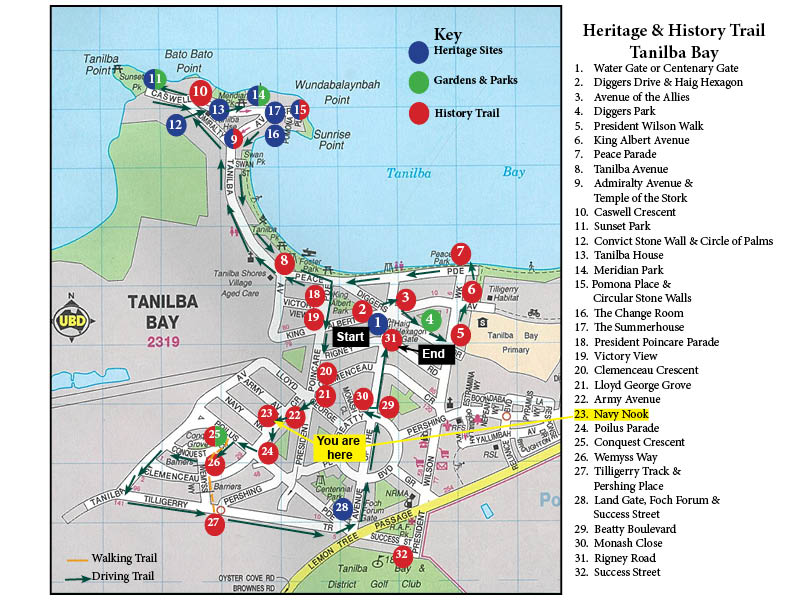
Navy Nook serves as a tribute to the courage and sacrifice of the men and women of the Royal Australian Navy who served during this pivotal period in history.

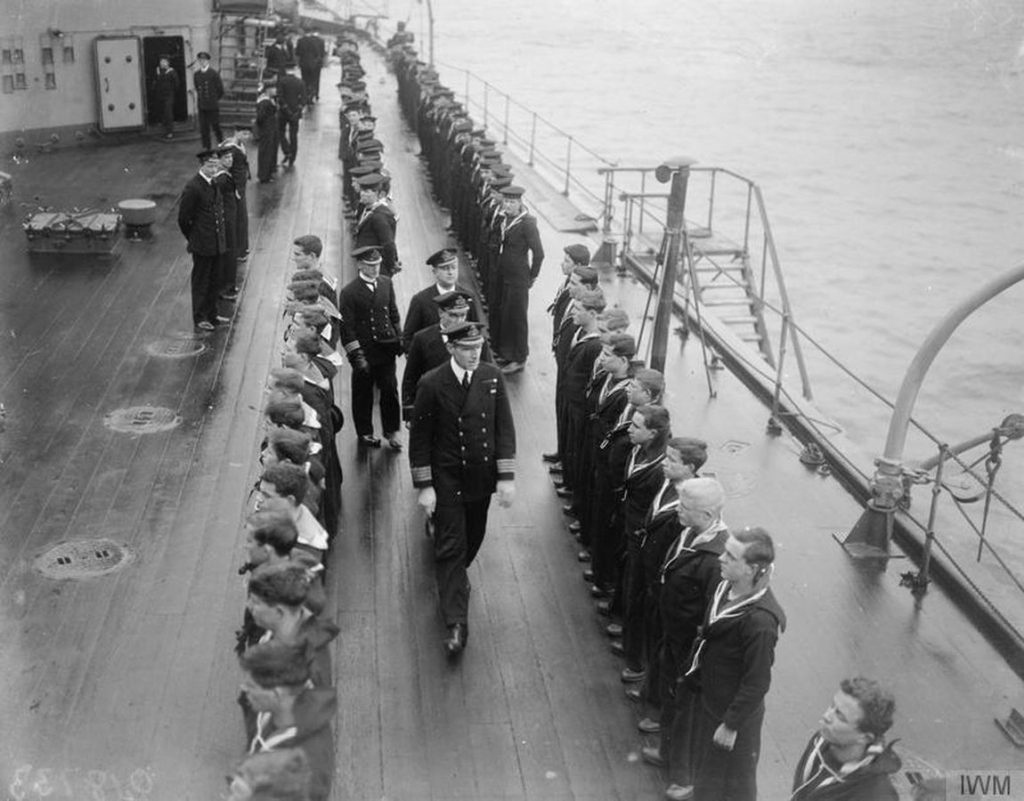
The Australian Navy during the First World War. Captain Backhouse is inspecting the company of the Australian battlecruiser HMAS Australia. Royal Navy photographer. Source: Wikipedia Commons Public Domain.
Formation and Early Years
The Royal Australian Navy was officially established on March 10, 1901, following the federation of the Australian colonies. At the outbreak of World War I in 1914, the RAN was a relatively small force, but it quickly expanded to meet the demands of the conflict.
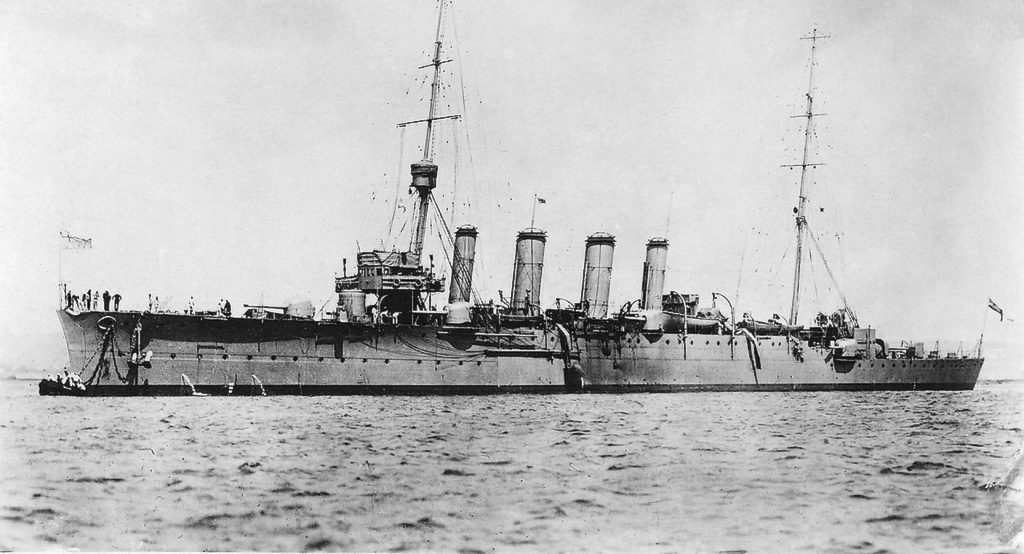
HMAS Sydney WW1. Source: Wikipedia Commons Public Domain.
Battle of Cocos (1914)
In the early stages of the war, the RAN was involved in the Battle of Cocos, a naval engagement between the Australian light cruiser HMAS Sydney and the German light cruiser SMS Emden. The engagement resulted in the sinking of the Emden, marking a notable early success for the RAN.
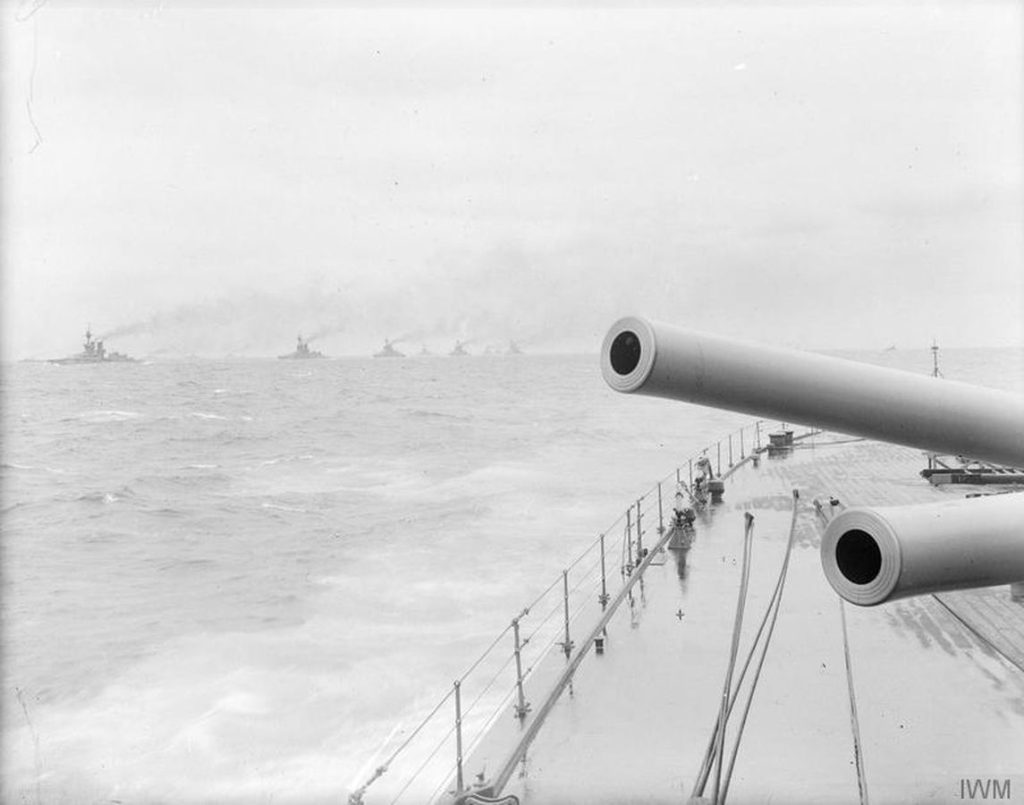
The Royal Navy during the First World War. The battleships of the Grand Fleet patrolling & escorting trade vessels. Imperial War Museum. Source: Wikipedia Commons Public Domain.
Operations in the Pacific and Indian Oceans
The RAN played a vital role in patrolling and securing the Pacific and Indian Oceans. Australian naval vessels were involved in escorting troop transports, protecting trade routes, and conducting anti-submarine operations.
Flagship of the Royal Australian Navy, HMAS Australia, Sydney Harbour, between 1913-1924. Unknown photographer 1913-1924 Source: Wikipedia Commons Public Domain.
North Sea Operations
Australian warships, including cruisers and destroyers, served in the North Sea as part of the Royal Navy’s Grand Fleet. They participated in naval operations against the German High Seas Fleet, contributing to the overall blockade of Germany.

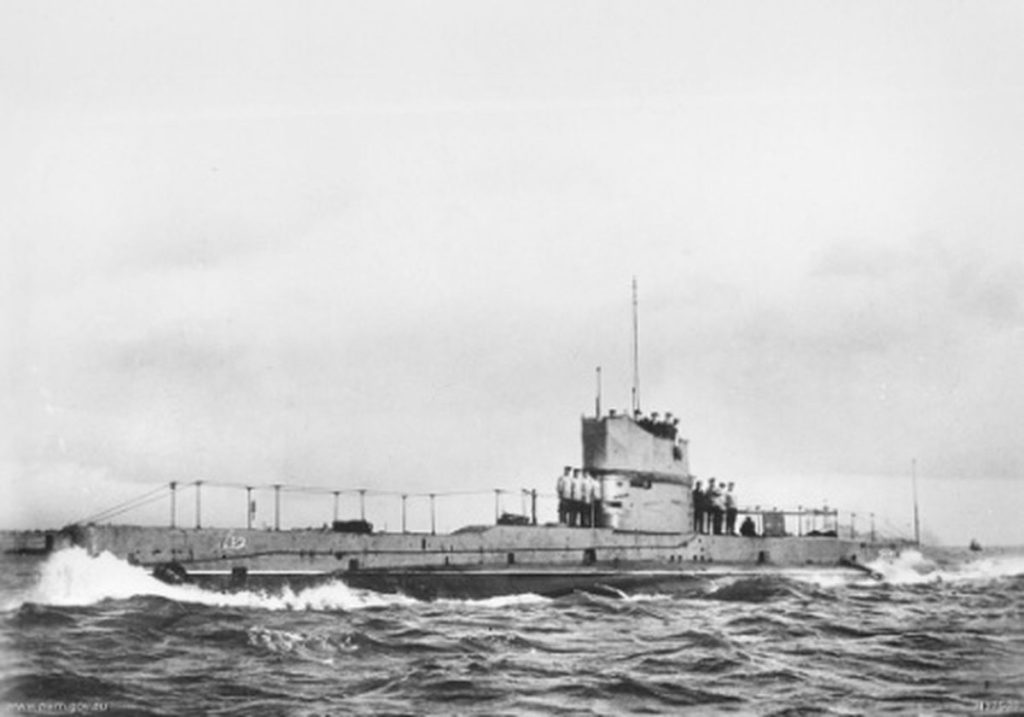
Australian Navy submarine AE2 at sea. AE2, and its sister ship AE1 were the first submarines allocated to the Royal Australian Navy, arriving in Sydney Harbour on 24 May 1914 under RN command. On the outbreak of WW1, both submarines were dispatched to New Britain under escort. AE2 was later based at Suva, returning to Sydney in November 1914. On 31 December 1914, AE2 departed from West Australia with the second ANZAC convoy. The submarine was towed across the Indian Ocean and eventually arrived in the Gallipoli area, joining the British Naval Squadron. In April 1915, AE2 was ordered to attempt the passage through the Dardanelles to the Sea of Marmora and disrupt enemy shipping. The passage was successful. On 30 April 1915, AE2 was moving to meet a RN submarine that had arrived after the RAN vessel was forced to dive, but technical problems made the vessel impossible to handle, and the captain was forced to surface and surrender after opening all tanks to sink AE2. Between 1914 and 1915. Donor W M Warburton. Source: Wikipedia Commons Public Domain.
Submarine Activities
The RAN operated submarines during World War I, conducting patrols and engaging in anti-submarine warfare. The most notable RAN submarine during this period was HMAS AE2, which operated in the Dardanelles during the Gallipoli Campaign.
The Royal Australian Navy aircraft carrier HMAS Sydney (R17), foreground, and the U.S. Navy carrier USS Valley Forge, U.S. Navy Photo. Source: Wikipedia Commons Public Domain.
Naval Aviation
The RAN also made advancements in naval aviation during the war. The first aircraft carrier commissioned into the RAN, HMAS Sydney (not to be confused with the cruiser involved in the Battle of Cocos), played a role in supporting anti-submarine and reconnaissance operations.


Sailors of the Royal Australian Navy stand in formation during an inspection of the troops by Chief of Naval Operations (CNO) Adm. Gary Roughead, escorted by Vice Adm. Russ Crane, Chief of Navy of the Royal Australian Navy, at the HMAS Kuttabul Naval Base in Sydney. Source: Wikipedia Commons Public Domain.
Post-War Developments
Following World War I, the Royal Australian Navy (RAN) underwent significant modernisation and strategic re-evaluation. Beginning the conflict with 16 ships and 3,800 personnel, including contributions from the Royal Navy, the RAN expanded to 37 ships and 5,000 personnel by the war’s end.
The war experience emphasised the importance of naval power, shaping Australia’s maritime strategy in the interwar years and influencing the RAN’s evolution. The navy’s contributions during World War I were integral to Australia’s commitment to the British Empire’s war effort and had enduring effects on its development and capabilities.
The Royal Australian Navy the First 75 Years. Jonty 1959 The first 11 mins 18 secs covers WW1 (Duration 1 hr 26 mins 27 secs) Source: YouTube.

Get in Touch with Port Stephens Family History Society
We’d love to hear from you! Send us an email or visit us any Thursday from 10.00 am to 1.00 pm at the Lemon Tree Passage Old School Centre